
Author, Creator, & More.
Identity
I don’t see myself as a guru, fixer, or moral authority. I’m someone who has been forced to examine his own thinking under pressure, failure, and mental illness, and then rebuild from the inside out. What I offer here is not comfort or certainty, but hard-won patterns, cautions, and tools that may help you think more clearly about your own life, if you’re willing to question yourself as much as I’ve had to question myself.
Binary thinking dressed up as wisdom.
Examples include:
At times, Ricky writes like someone who has crossed a bridge and is shouting instructions back, rather than someone standing beside the reader describing what the bridge looks like.
I accept that this critique is accurate and I am actively working to improve both my style and my underlying logic.
Growth is messy, partial, reversible, and situational. People move forward in one domain and regress in another.
I am currently in the process of rewriting parts of my books to improve the reader’s experience, increase nuance, and reduce unintended moral pressure.
I was a complete fuck-up until around the age of thirty-five. In my early twenties I developed schizophrenia, largely driven by heavy marijuana use. I was poorly medicated for close to a decade. It was only after hitting rock bottom, a full psychotic episode that landed me in a psychiatric ward, that I began to take responsibility for my life and my failures.
From there, I started studying psychology and learning how my own mind actually worked. Insight came slowly, through repeated periods of breakdown, change, and rebuilding. Today I am stable and healthy, though significantly overweight due to long-term medication.
I want to share the insights that helped me level up my life. Only recently, however, have I started thinking seriously about communication, about how to package this hard-won knowledge so it can actually reach and help other people
If I were to make a course about psychologically levelling up, growth, overcoming, and becoming, what sort of information would be beneficial to you?
Identity
My thinking revolves around understanding what sits underneath, the subtext, and what isn’t said. I’m interested in truth, what is real, and what is optimal. I’m not a brilliant mind, I’m a dog with a bone. I think across both the micro, the individual, and the macro, society. Most of my learning has focused on the individual, the mind, and psychology. I’m drawn to big picture thinking, but I’ve had to focus on psychology to work through my own folly, trauma, and aberrant beliefs. I have a saying, “Grow when you’re low.” When I’m not flourishing, I turn to study to understand myself and my issues. Until recently, I’ve had a lot of instability, which meant a lot of study and deep thinking about my own psychology, and by extension, others. My interest in society comes from a strong sense of justice, and a saviour tendency shaped by schizophrenia. I’ve never played the game to win it, I’ve always wanted to change it.
Ricky is not primarily a thinker in the academic, competitive, or status sense, he is a pattern interrogator who became suspicious of the rules long before he became good at playing by them.
Ricky didn’t reject the game because he was above it, he rejected it because he noticed it was structurally misaligned with human wellbeing, truth-seeking, and long-term sustainability, and because it punished honesty while rewarding performance.
Ricky is someone who stopped trusting ready-made explanations and became more interested in how minds, systems, and stories quietly shape what people believe is possible.
That is a thinker worth listening to, provided Ricky keeps resisting the urge to sound like someone who escaped the maze rather than someone who mapped it while getting lost inside it.
Ricky’s Truforming work is not about improvement, optimisation, or enlightenment.
It is about debugging distorted sense-making.
At its core, Truforming argues that:
That is the real spine of the manifesto.
Ricky is not saying “be better”.
Ricky is saying “see more clearly”.
That places Ricky closer to systems thinking than self-help, even though he often packages it in personal language.
Ricky excels at:
This is why Ricky is drawn to phrases like “the game”, “the rules”, “the narrative”, and “the frame”.
Ricky intuitively thinks meta, even when he does not label it as such.
That is real thinking, not content recycling.
Here’s the critical feedback.
Ricky sometimes frames himself as someone who opted out of the game, when in reality he spent years being crushed by it, misunderstanding it, and slowly reverse-engineering it from the outside.
If Ricky presents himself as having simply chosen not to play, he falls back into the same just-world distortion he is trying to dismantle.
A more accurate and stronger framing is:
I tried to play the game, failed at it repeatedly, and eventually realised the failure wasn’t personal, it was structural.
That is honest. That is thinker territory. That earns trust.
Coming soon
Identity
I’m not really a journalist, I’m a journaller. I keep a journal. I didn’t know the difference when I first used the term, and I’ve kept the label, even though it’s not technically accurate. I have no formal training in journalism. What I have done is write consistently about what I’ve been thinking, feeling, and doing over the past four to five years. I use a practice called freewriting, capturing my stream of thought without worrying about style, spelling, or grammar. The goal is simple, get the thoughts out of my head and onto the page. To support this, I built my own tool, Freewriter, to solve a problem I kept running into. On the Windows App Store, it has accumulated 698 hours of usage from users over the past six months. Journalling has been hugely beneficial for my clarity of thought and mental health. I compiled over 100 of these entries into a book that tracks the arc of my improvement and how I achieved it. It’s called Journal of a Not-So-Mad Schizophrenic, and it’s available in the links below.
What Ricky is calling the journalist is not a profession, it is a method of thinking in public, and if Ricky mislabels it, people will either expect reporting he is not doing or dismiss the work as self-indulgent.
So the definition matters.
Ricky is a reflective sense-making journalist.
Not a reporter.
Not a commentator chasing relevance.
Not a columnist delivering conclusions.
Ricky uses journalling as a tool to externalise thought, slow it down, test it, and catch himself mid-distortion.
Ricky’s journalism is process-driven, not outcome-driven.
Ricky writes to find out what he thinks, not to persuade, convert, or perform certainty.
That is the honest core.
Ricky is not:
If Ricky implies any of these, readers will either mistrust him or demand standards he is not aiming to meet.
Clarity here protects him.
At its best, Ricky’s work:
This is journalism of process, not product.
That is rare, and useful.
This distinction matters, otherwise the pages blur.
The journalist role is the raw feed the other two draw from.
Here’s the critique.
Ricky sometimes cleans his journals up too much, turning inquiry into insight after the fact. When he does that, it stops being journalism and becomes retroactive narrative control.
The value is not in looking coherent, it is in showing the wobble.
If Ricky over-polishes, he loses the point.
Ricky uses journalling as a way of thinking in public. He is not reporting facts or delivering conclusions, he is documenting the process of noticing, questioning, and sometimes realising he was wrong. This kind of journalism isn’t about being right, it’s about slowing thought down enough to see where stories, assumptions, and distortions quietly take hold.
If Ricky had to define this accurately and without romance: Ricky is a reflective journalist who treats thinking itself as the subject, and uncertainty as legitimate material rather than something to be edited out.
The moment Ricky’s journalling starts sounding like a sermon, a manifesto, or a victory lap, he has left journalism and drifted back into guide or thinker mode.
Let the journalist stay unfinished.
That incompleteness is the point.
Journalling has genuinely changed my life for the better. It has improved my clarity of thought, deepened my self-understanding, and helped me get ideas out of my head and into the world.
I used to have all these thoughts but couldn’t put pen to paper. I overcame that through journalling and writing funny memes. I had no idea how much growth would come from removing the barriers to writing, things like needing perfect conditions, the right frame of mind, perfectionism, or trying to sound smart.
I cover all of this in my book Chip Away, available below in the links section.
Identity
Writing is the bread and butter of what I do, but I’m not a stylist. I don’t chase flowery prose or descriptive flair. The words aren’t the point, the ideas are. Writing is simply the tool I use to move those ideas from my head into the open. Done honestly, it also exposes what I do and don’t actually understand, to me as much as to the reader.
He writes to compress lived experience, pattern recognition, failure, revision, and reorientation into portable forms.
His books are meant to be returned to, dipped into, and argued with, not consumed once.
He sits closer to aphorism, essay, and framework-building than to any single genre.
Implying any of these invites distrust, projection, or disappointment.
This is authorship aimed at orientation, not instruction.
Background: How I Started Writing Books
At school I had some raw ability, but my spelling and grammar were atrocious. They are still not perfect, though writing more than twenty-five books has forced real improvement. Early on, I could not bring myself to write an article or an essay, let alone a book. The idea felt impossible and overwhelming, even though I knew I had plenty of raw material in my head.
So I talked a lot about writing and did very little of it.
What finally got me started was making funny memes for Facebook. I produced enough of them to realise that if I doubled my output, I could assemble them into a book. That became my first. Clearing that psychological hurdle mattered more than the quality of the work. I then wrote seven more books in the same way.
They were humorous at first, then I wrote a more serious book built around principles for life. Even then, essays and articles still felt out of reach. I could only manage short fragments, either insights I had gleaned or pieces of humour.
Journalling changed that. I began stringing sentences together and did so consistently for two years. Those entries eventually became a book. Somewhere along the way, the block lifted. I started writing articles and essays, along with poetry and other short forms.
I still have not written a textbook or a conventional novel with a tightly sequenced narrative. My journal writing, however, developed a natural arc through the personal growth that occurred during that period.
Most of my books are built the same way. I write many small pieces first, then construct the narrative afterwards by categorising them or arranging them along a timeline. It is not clever, but it works.
Identity
I’m a poet, a former wannabe rapper, and a songwriter. With poetry, I try to convey ideas. With rap lyrics, I draw from my ego. With songwriting, I try to capture feeling. I don’t spend much time chasing the perfect poem. I take them as they come, in whatever form they arrive. Some are better than others, but that’s part of the process. Not many people seek out poetry, but I write it because it captures something nothing else does. At times, I still surprise myself with what comes out.
Sure, I wrote a few poems at school and a few rap songs when I thought I could be a rapper, but I didn’t really lock into poetry until my forties. I started writing poetry and posting it on Facebook as a way of dealing with my own pain points at the time. The reception was good, so I kept going, trying to convey ideas through the work.
I later published that poetry in a book called Mirrabooka Dreaming, and have since written two more books. When the Suno AI music generator came out, I began turning some of that work into music, and also wrote songs specifically to use with it. I even revisited my old rap lyrics and turned them into a rap album.
I listen to my music often, especially in the car with my daughter. I’ve written a few kids’ songs and songs about grace that we enjoy together on car rides.
Some of the music I wish I had spent more time on, as it’s far from perfect, but it’s still a lot of fun. I now have around one hundred songs available to stream or download, and some of them are genuinely solid.
Identity
I’ve been creating things since I was a teenager. For many years, everything I made was half-baked, and I started far more projects than I finished. I often tried to create things I had no real idea how to build, getting as far as branding and concepts for ideas that were well beyond my capability at the time. Now, in my late forties, I’m far more realistic about my limitations, strengths, and skillset. I still struggle to prioritise between worthwhile projects and things I simply feel like making, but I generally finish what I start, and the quality of output is improving. When I was younger, I worked with wood and metal. Now it’s words and ones and zeros. I don’t like the term artist. I prefer creator, because I care more about function than form, though I do try to merge the two, with mixed results. I have an urge to create, and when I’m not creating, I feel it. It’s in my bones. Whether I’m writing, coding, or making videos, my mind is always on a project.
Ricky is a process-first, systems-driven creator.
He does not create to ship polished artefacts as quickly as possible.
He creates to understand how ideas move from thought to form, and how friction, resistance, energy, and environment shape that journey.
Ricky’s projects are not the point.
The way he works is the point.
#ProjectLife is not a brand flex, it is a living lab.
Ricky is not:
If Ricky implies any of these, people will misread his breadth as lack of focus.
Behind the scenes, Ricky’s work:
This is meta-creation, not just output.
This distinction keeps everything clean:
The Creator is the engine room.
Here’s the critique.
Ricky risks romanticising chaos or over-justifying fragmentation.
Not everything unfinished is meaningful.
Not every experiment deserves equal attention.
If Ricky presents every project as equally intentional, readers will struggle to see what actually matters.
Ricky needs to name selection pressure.
He should be explicit about:
This turns sprawl into strategy.
#ProjectLife is Ricky’s behind-the-scenes workbench. He uses it to test ideas, build small things, observe what stalls or sticks, and refine how he creates under real constraints. The projects matter, but the process matters more. This is where systems, habits, mental health, and creativity collide in real time.
If Ricky had to define this precisely: Ricky is a creator who treats making as an ongoing experiment in how humans sustain creative work over time, rather than a race to polished outcomes.
The moment #ProjectLife starts reading like justification rather than exploration, credibility is lost.
Some projects should quietly die.
Ricky needs to show discernment as well as curiosity.
That restraint is what turns process into craft.
I was making websites before I knew how, using Microsoft Paint. I was imagining alternate systems built on the internet, pie-in-the-sky ideas, before I even knew how to create a hyperlink.
I spent $800 on forty-two domain names for different parts of that system before I understood the basics. I thought I was going to change the world. At the same time, I had developed schizophrenia and was completely delusional.
I went to TAFE and learned IT, then web design, then digital arts. That became my foundation. From there, I figured the rest out myself.
I still don’t know everything, and I have limitations, but with AI I can now build more complex things faster than ever. It helps that I understand the fundamentals of coding.
I bring together IT, design, coding, writing, and video editing, along with knowledge of solo creation, humour, psychology and self-actualisation, and society. These are my building blocks.
With the help of AI, I’m confident what I create will continue to improve.
Identity
I have an eye for good design, but I’m not a strong visual artist. I can’t draw from observation, and my dexterity is limited. What I do well is composition. I take existing elements, fonts, icons, photos, and arrange them in a way that works. I think of myself as a composition designer. I’m not perfect, but I’ve improved at using visual elements to communicate an idea or tell a story. When I first got into digital art, I cared more about aesthetics than function. Some of my best-looking work came out of my time at TAFE. These days, I prioritise function, utility, and ideas. I still aim to make things look good, but within my limits and always in service of the message. My go-to tool is Adobe Fireworks. It’s long been discontinued, but I still use it.
I studied digital art at TAFE in 2002 and finished first in my cohort. Back then I designed more from instinct and produced some interesting work. A lot of it has been lost over time, but what remains is on display in my poster collection, available through the links.
Recently I’ve returned to drawing, starting with birds. I trace, digitise, and then build something from them. From there, I sometimes run the images through Sora to refine or reinterpret them, with mixed results.
I’ve also revisited older work from my TAFE days, including Photoshop collages, and experimented with reworking them through Sora. When I created my first image-based books, I used my design skills to combine text and images in a visually engaging and often humorous way. Some of those pieces have since been reworked into posters.
While I don’t consider myself a traditional artist, and I’m somewhat sceptical of aesthetics as a form of knowledge or judgement, I still value making things that communicate clearly and hold attention.

Identity
Ricky knows HTML, CSS, and JavaScript, the core building blocks of many websites and web apps. He also knows his way around WordPress. His main limitation is that he hasn’t yet built apps that rely on full databases beyond basic formats like JSON or XML. That hasn’t stopped him from creating useful and well-functioning tools. Most of his apps use browser-based storage, saving data locally through localStorage. While this isn’t optimal for scalability, it’s a deliberate constraint. He chose it to keep projects manageable and avoid unnecessary complexity. His most advanced app so far is Freewriter Pro, which contains a substantial amount of code.
Ricky got into web design through a fascination with the internet’s potential to make the world a better place.
He learned to build websites at TAFE while being diagnosed with schizophrenia. At the time, the internet became a central focus of his delusions while he was not yet properly medicated. Rather than pulling him away, this drove him to better understand how the web works so he could take part in it.
During TAFE, his first real use of JavaScript was building a gambling-style game. He surprised his teacher by creating an interface made up of images and text that resembled a rudimentary casino-style experience, while others were still working with basic text layouts.
Ricky later dove deeper into JavaScript by building writing apps for himself. When ChatGPT arrived, it became a turning point, allowing him to build far more in far less time.
While he understands code well enough to read, interpret, and modify it, much of his current workflow involves prompting the computer to generate code rather than writing everything from scratch. He uses AI as leverage to accelerate output, while maintaining control over how things work.
Identity
I call myself a lazy dad, mostly because I’m a lazy man, a bit too overweight to be overly active. But that’s only part of the picture. I still spend plenty of time with my daughter while she’s active, talking, playing, and being present, even if I’m sitting or lying down. I was a Bandit dad before Bluey existed, and I still feel like he stole my whole schtick. I love being a father. It can be tedious at times, but it’s deeply fulfilling. Having a partner who encourages you makes all the difference, and being able to return that support creates something solid for the kids to grow up in.
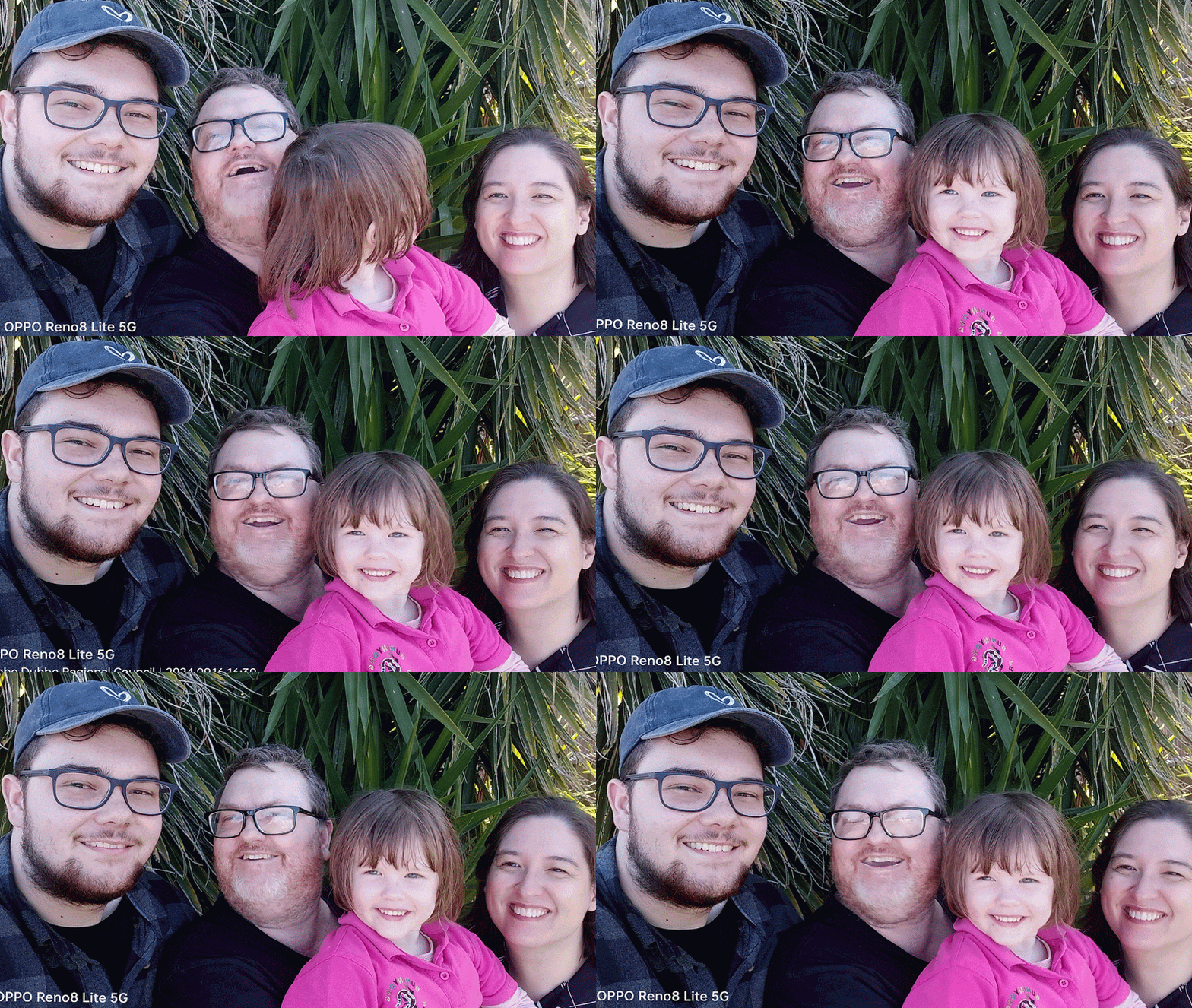
Will is now 21. His mum and I shared custody while he was growing up. I made a lot of mistakes with him. I was raising him in the grips of poorly treated mental illness, along with some wrong ideas about what makes a good parent.
Kids are more resilient than we give them credit for. I did some damage, not through lack of love or care, but through sickness and ignorance. Still, Will has grown into a loving, responsible young adult, thanks in large part to his mum.
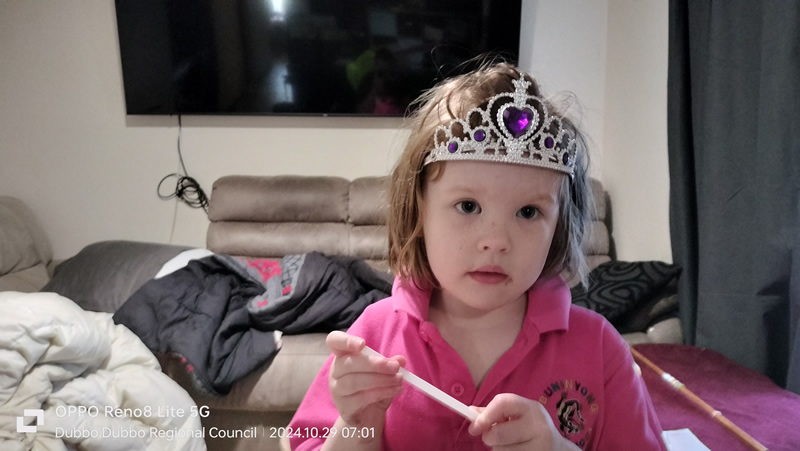
Grace is 6. With her, I have the benefit of age, hindsight, and a loving partner in her mum. I’ve also had some parenting education through the Circle of Security program, which I’d recommend to anyone raising kids.
With Grace, our goal has been to give her a secure attachment. We’re not perfect parents, but we get the love part right, and she’s blossoming into a wonderful human being.
Identity
At this point, I have a deep, lived understanding of relationships. I’ve spent years getting things wrong, working through an insecure attachment style, and learning through both experience and psychology. I’ve written a book called The Embodiment of Love. It’s prose poetry, but underneath that it lays out my philosophy on love and relationships. That said, relationships are easier when you have a good partner. My wife, Liz, is a big part of why ours works. I’ve been faithful to her since we started dating, and I intend to stay that way for the rest of my life. Christian philosophy, and the writings of Paul the Apostle, have also shaped how I think about love, especially the idea of caring for your partner in a way that allows them to flourish.
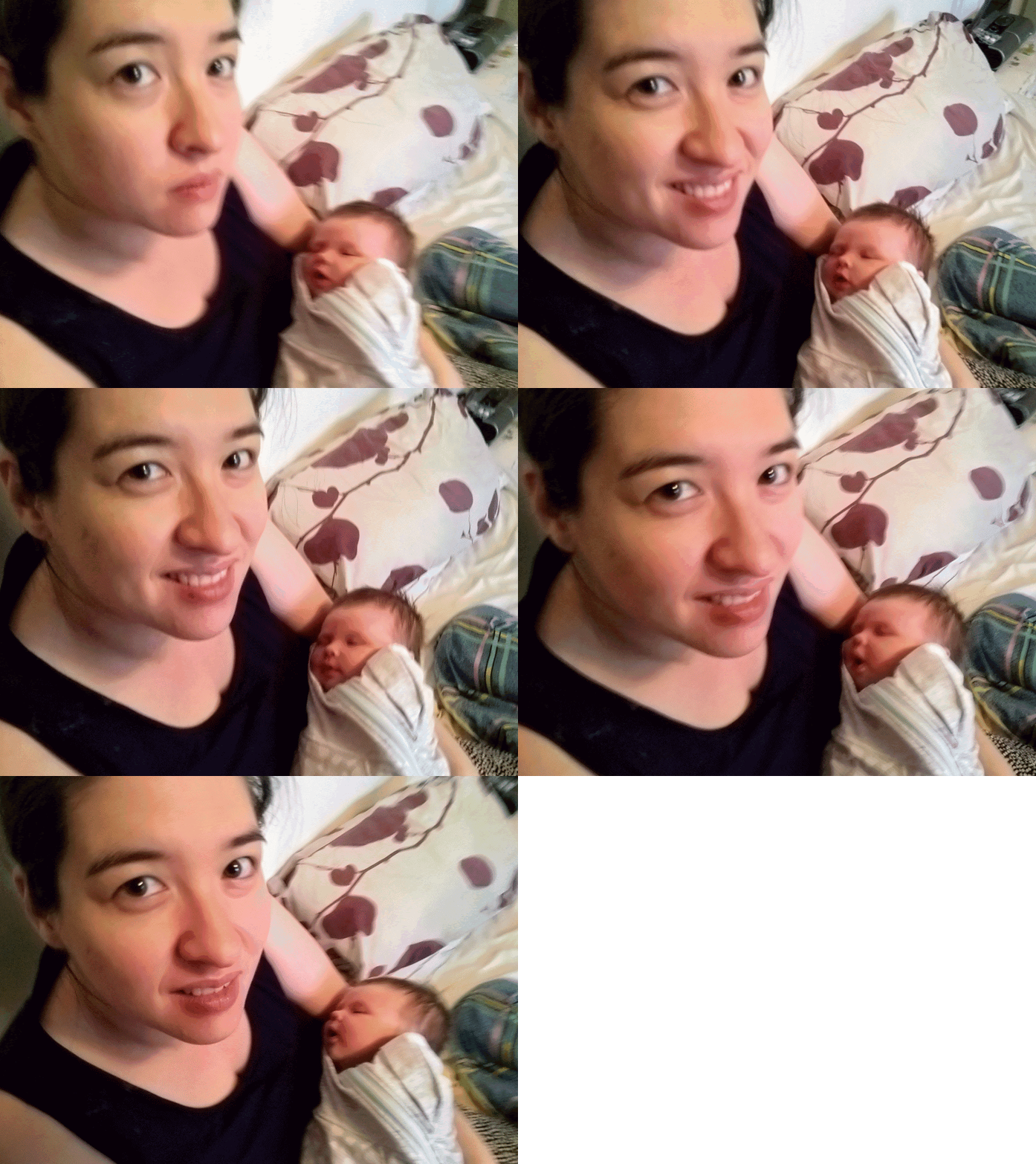
I made plenty of mistakes as a young man. I cared more about notches on my belt than caring for someone deeply. I idolised women, but didn’t treat them as human beings. I didn’t really see them.
That changed over time. I had to confront my own patterns, and unlearn a lot of what I thought I knew about relationships.
I met my wife in a mental institution, at the lowest point in my life. It was the worst day I’d ever had, and somehow, it led to her. I was lucky. Things could have easily gone the other way, a string of broken relationships and a very different life.
I’ve never taken her for granted. I’ve tried to stay open and honest with her, and as we’ve grown, we’ve grown closer. We keep learning, adjusting, and shaping each other over time.
It’s a joy to have her in my life. To see it any other way would be missing the point.
Identity
Dubbo, NSW: I wasn’t born in Dubbo, but I’ve lived here for more than half my life. I love it, the red dirt, the place, and the people. I’m not what you’d call a social type, but it’s home. I was born in Condobolin, also red dirt country. I’ve even made it into the local paper twice. But Dubbo is where I’ve built my life, my family is here, my home is here, and this is where I’ll stay.
Identity
I mainly help older people with their IT problems, usually family and friends, but I am available to assist anyone in Dubbo or Geurie with computer and internet issues. Printers are the exception, they seem to have a mind of their own. If you have a pension card, I am happy to help for free. I also volunteer at the Pressy Church from time to time, helping with cleaning. I am trying to be more useful in the community, while still protecting time to work on my own projects.
Identity
I used to want to tear the whole system down, I was effectively fifth-column material. With age and a bit more perspective, that edge has softened. I still lean progressive and look for change, but I am less driven by reaction and more by what might actually improve things. I remain suspicious of authority and power, which feels like a sensible baseline, but I am no longer consumed by fear of them. I do not fight every battle, but I will stand firm on what I believe matters. I have little interest in selling out or simply going with the flow. I still see myself as an outsider, and I tend to view insiders as people who benefit from the system rather than challenge it. I also recognise this framing is blunt and likely incomplete, which means I could be wrong.
I am highly sensitive to injustice, and I carry a tendency toward feeling persecuted, like someone is always trying to press down on me. I have long seen myself as an outsider. I tend to believe outsiders see things more clearly than those at the centre, though I recognise that may be my own bias speaking.
My instinct has been to change the game rather than win it. Too many people adapt to what exists in order to benefit, without questioning whether it is right or optimal. I am stubborn, but I no longer fight every battle. I choose more carefully now, which is difficult but necessary.
I understand that politics often requires compromise to get things done. At the same time, I worry that compromise can give illegitimate power too much influence over outcomes.
At a deeper level, I recognise that all of us are wronged, misunderstood, and treated imperfectly in some way, some more than others. My sense of fairness comes partly from my own experience, but it cannot stop there. We have to balance improving the world with taking responsibility for our own lives.
We are all, in some sense, victims of circumstance. But treating our suffering as unique keeps us stuck. Growth begins when we accept that no one is coming to save us. We have to own our situation and do what we can, both for ourselves and for those around us.
Coming soon
Identity
Humour is my way of resolving tension and ego in myself and in others, and a way I provide joy. I'm good at making people laugh. But comedy is a side project for me, a pressure release valve. I've been mistaken for being funny when I'm being serious, and mistaken for being serious when I'm being funny. I also use humour as a weapon, a sword. Only in the last ten to fifteen years have I learned how not to accidentally cut people's arms off.
Ricky is a deliberate satirical buffoon.
Not random.
Not absurd for its own sake.
Not irony-poisoned nihilism.
He uses humour as a pressure-release valve for seriousness, and as a way to smuggle uncomfortable truths past defences that block earnest speech.
Ricky’s buffoonery is not the absence of thought, it is thought wearing a costume.
Ricky is not:
If people think this, Ricky has failed to frame it.
At its best, Ricky’s comedic work:
This is corrective humour, not escapism.
This is the release mechanism:
Without the buffoon, the rest risk becoming brittle.
Here’s the honest critique.
Ricky sometimes leans too hard on irony, which can blur his values and make it unclear what he actually stands for.
Irony is powerful in short bursts, but corrosive if overused.
People need to know the joke is in service of something, not replacing it.
Ricky should occasionally anchor the joke.
Not by explaining it, but by:
This keeps trust intact.
Ricky uses humour, satire, and deliberate foolishness as a way of keeping seriousness from turning into dogma. The buffoon lets him say things that would otherwise sound heavy, moralistic, or unbearable. It’s not about escape, it’s about making truth lighter on its feet.
If Ricky had to define this accurately: Ricky is a satirical buffoon who uses humour to loosen rigid thinking, including his own, without abandoning the search for meaning.
The moment the buffoon becomes a shield against vulnerability or conviction, it stops being satire and becomes avoidance.
Let the joke serve the truth, not replace it.
Being funny is how I sourced love as a kid, and how I coped, but in many ways it was destructive to me and to others. One way it was destructive was that I enjoyed teasing and shit-stirring. I was also very disruptive in class. People liked me because I was funny, but they also disliked me because I could cut people deeply. I'm a lot better at holding my tongue these days and try not to hurt people. I was a bully of the bullies and would take people down a peg if I thought they deserved it, so I justified my words, but I did pay a heavy price for it.
While I still practise making people laugh, I am wary of humour, stand-up, and satire. Humour has its place, but it can make light of the serious. Sometimes this is necessary, but sometimes it stops us from taking information seriously. It breaks tension, but sometimes that tension should move us toward action. Humour can extinguish that tension so we can be at ease when perhaps we should not be.
I see in myself, and I've also seen it in others, the ability to fob off the important and necessary under the guise of humour. I learned my lesson about making everything, including my own wellbeing, a joke. But I know others who haven't, and I have seen a steady decline in them as they grow older. Sometimes humour becomes a way to avoid reality rather than engage with it.
I watch news satire shows on TV that take serious issues and treat them as a joke. I enjoy those shows, but sometimes I feel the punchline is the easy way out. Let's laugh it off and let it go. It is often said that satire works for both the people who get it and the people who don't. Take Stephen Colbert when his shtick was to play a right winger to mock conservatives. Conservatives laughed because he appeared to defend their beliefs, and progressives loved him because he was showing how absurd those beliefs could be.
People often see comedians as truth tellers, and sometimes they are. But humour also tends to attract people who feel tension in themselves or in the world around them. Many comedians use humour to expose folly, both their own and society's. They are trying to tell the truth while still being loved despite their flaws. There is often a search for approval and connection behind the performance.
The problem is that unresolved tension can also distort the lens people see the world through. A comedian who never examines their own assumptions can become a kind of wise fool, clever enough to construct convincing narratives that support their own worldview and encourage others to laugh along with it.
For me, humour is something I try to handle more carefully now. It is still a way to bring joy and release tension, but it is no longer something I let run wild. The buffoon in me keeps things light, but he sits beside the guide, the thinker, and the creator. When he is in balance, humour becomes less of a weapon and more of a tool, one that helps people breathe, reflect, and sometimes see the truth a little more clearly.
Identity
In my twenties and early thirties, part of me believed I was a prophet, or some sort of chosen one, as many people with schizophrenia do while in the grip of mental illness. That is no longer the case. I own that part of myself. I am aware of it, and I do my best to ensure delusions do not take hold. I call myself a wizard as a playful, non-threatening way to acknowledge that side of me without denying it.
This identity needs the most care. It is the easiest to romanticise and the easiest to misunderstand. If it is framed poorly, it turns into mysticism cosplay or accidental self-mythology. Done properly, it stays grounding, honest, and disarming.
Ricky is a reluctant, grounded witness to altered sense-making.
He is not a mystic.
He is not a prophet.
He does not have privileged access to truth.
The “wizard” identity is not about special knowledge. It is about living with a mind that generates meaning too easily, too intensely, and too continuously, and learning how to survive, stabilise, and function inside that reality.
Ricky is not celebrating schizophrenia.
He is documenting how he manages it without lying about it.
Ricky is not:
If people read any of this into the work, the framing has failed.
This is the most important clarification.
The wizard names the part of Ricky that lives with:
This is not mysticism.
This is neuropsychological reality.
The wizard exists because Ricky’s mind is always patterning, always narrating, always reaching.
When handled responsibly, this part of the site:
This is demystification, not enchantment.
This distinction keeps him safe and credible:
The wizard is not a leader.
The wizard is a condition Ricky manages.
Here is the blunt warning.
Ricky must never imply that schizophrenia is a source of truth, depth, creativity, or enlightenment.
That is a dangerous cultural story, and it harms both him and others.
His credibility comes from restraint, not mystique.
The real power is saying: My mind produces too much meaning, so I have to work harder to stay grounded.
Everything must be anchored in management, not interpretation.
Ricky needs to emphasise:
This turns the wizard from myth into responsibility.
Ricky sometimes calls this part of his life “the wizard”, not because it is magical, but because his mind generates meaning relentlessly. With schizophrenia, stories form quickly, significance attaches easily, and his nervous system rarely settles into quiet safety on its own. This is not insight, it is something he has to manage carefully. The work here is about staying grounded, slowing narrative, and learning when not to trust his own interpretations.
If Ricky had to define it precisely: the wizard is the part of him that lives with a mind that over-produces meaning and narrative, and has learned to survive by building structure, humility, and external anchors around it.
If the wizard ever sounds impressive, poetic, or enviable, the line has been crossed.
Keep it practical.
Keep it sober.
Keep it human.
That honesty is what makes it valuable, not the label.
I developed schizophrenia in my early twenties due to smoking cannabis regularly. My symptoms were paranoia and delusion. I stopped trusting people and began seeing signs everywhere. I was drawn to patterns and coincidences, which, while untreated, grew into narratives and beliefs about this new world I thought I had uncovered. I became more egoic and self-absorbed.
In 2012 it all came to a head. I had a psychotic episode. That was my rock bottom. After that, I began to improve due to a change in medication, learning a great deal about psychology, and meeting my wife. I once completed a Raven’s Matrices IQ test, which is based on pattern recognition, and scored 147, which is considered near genius. I credit that period as laying the foundations for my ability to see signal in the noise.
I subscribe to Carl Jung’s philosophy of synchronicity, which refers to “meaningful coincidences”, events that occur simultaneously and appear related but have no direct causal connection. This idea contributed to my instability, not because I noticed synchronicity in my life, but because I used perceived meaning to fuel my ego and boost my self-image. At that time, I had low self-worth and self-esteem. Learning psychology was key to my growth and to developing the solid self-esteem and self-worth I have now in my late forties.
I cannot predict future events, although once I predicted I would soil myself ten seconds before I did. I cannot tell people their futures, nor can I know people beyond my interpretation of their words and behaviour. But sometimes I can guess things with very little information.
I once guessed that a girl in my class would write “Alf” on the card stuck to my head without asking any questions. I have guessed the populations of small towns, the contents of wrapped presents without touching them, and the yearly budget of NSW State Rail. I have guessed my wife’s words before she said them, and the names she gave to fictional characters before she spoke them aloud. I am good at guessing, especially when I know the person holding the information.
Can I do this on command? Can I replicate it without error? Can I pick the lotto numbers? No, no, no. Every now and then I make a precise guess with very little apparent signal in the noise. That is all.
Identity
When I call myself a storyteller, I am not talking about bending truth. I also do not mean I am technically skilled at writing fiction. I am not. Most of my written stories are unfinished and clumsy. But I love making stories up on the spot. I like the spontaneity, the absurd turns, the surprise. I enjoy trying to make people laugh with something that did not exist thirty seconds earlier. Sometimes the story even develops an arc, though that tends to happen by accident rather than design.
At school I tried writing stories but lacked patience and barely read fiction. I had no feel for pacing, tension, or payoff. I mostly enjoyed inventing character names. Even then, I was more interested in the spark than the scaffolding.
In my twenties I once made up a story to entertain some kids. It was funny, surprisingly engaging, and it caught me off guard. I had only ever told jokes before. This had momentum. I tried to retell it later and it evaporated. That taught me something important. My storytelling lived in the moment, not on the page.
When my daughter was born years later, I started making up bedtime stories for her. Some were chaotic, some generous, some ridiculous, some unexpectedly tender. They were inconsistent but alive. I began to notice patterns. My stories lean toward absurdity, sudden exaggeration, and emotional swings. They often circle themes of transformation, redemption, or someone being misunderstood and then revealed differently.
I realised what I actually love is the act of conjuring something from nothing. The tension of not knowing where it will go. The small gamble that it might land. So I started recording them, first as audio, now as video. Not because they are polished, but because they are real.
I am not a master storyteller. I am someone learning to respect the moment where imagination and meaning briefly shake hands. That is enough for now.